Back to Home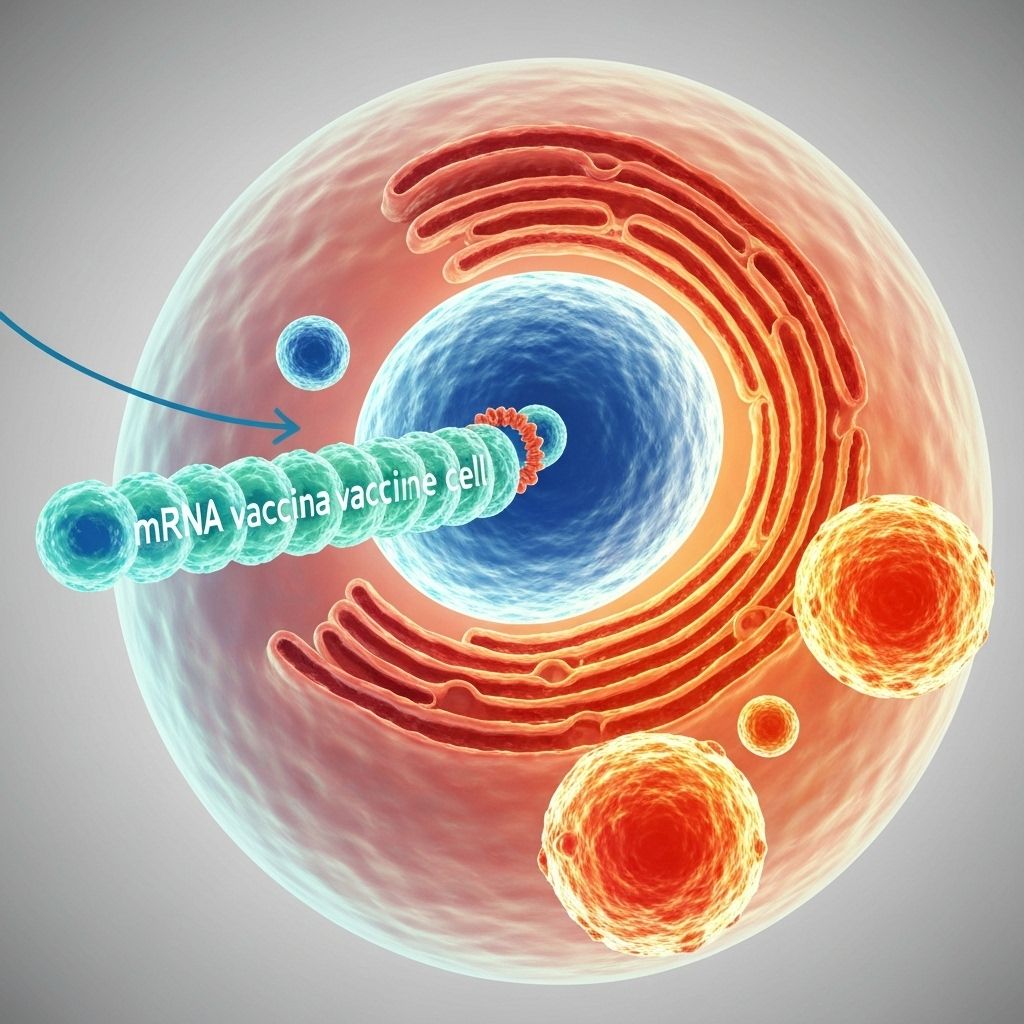




mRNA Vaccines Show Promise Against Multiple Cancer Types
By Dr. Rachel Green•October 24, 2024•
7 min read
•19,500 views
mRNA vaccine technology, first thrust into the global spotlight for its role in combating COVID-19, is now showing remarkable promise in the fight against multiple cancer types. Early clinical trials have demonstrated encouraging results against melanoma, colorectal cancer, and certain types of lung cancer, opening a new frontier in cancer immunotherapy.
Dr. Rachel Green, the lead researcher on the cancer vaccine initiative, explains the revolutionary approach: "Unlike traditional cancer vaccines that train the immune system to recognize cancer in advance, these mRNA vaccines are personalized to target the specific mutations present in a patient's tumor. This allows the immune system to precisely identify and eliminate cancer cells while sparing healthy tissue."
The process begins with a biopsy of the patient's tumor. Scientists then sequence the tumor's DNA to identify specific mutations that distinguish cancer cells from normal cells. Using this information, they design mRNA molecules that instruct the patient's cells to produce proteins similar to those found on the surface of their cancer cells.
When the vaccine is administered, these proteins trigger an immune response, training T-cells to recognize and destroy cancer cells carrying these specific mutations. The beauty of this approach lies in its precision—each vaccine is custom-designed for an individual patient's unique tumor profile.
In a recent phase II clinical trial involving patients with advanced melanoma, 59% of participants who received the personalized mRNA vaccine in combination with checkpoint inhibitor therapy experienced complete tumor regression. This represents a significant improvement over the 39% response rate seen with checkpoint inhibitors alone.
Similarly promising results have been observed in early trials for colorectal cancer and non-small cell lung cancer. While the technology is still in development stages, researchers are particularly encouraged by the durability of responses observed in some patients, with several remaining cancer-free for more than two years after treatment.
The mRNA platform offers several advantages for cancer vaccine development. It can be rapidly designed and manufactured—critical for personalized treatments. Additionally, the same basic delivery technology that proved successful for COVID-19 vaccines can be adapted for cancer applications, potentially accelerating development timelines.
The approach also addresses one of the fundamental challenges in cancer treatment: tumor heterogeneity. By targeting multiple mutations simultaneously, these vaccines can potentially eliminate not just the primary tumor but also metastatic cells that may have different genetic profiles.
Despite the promising results, significant challenges remain. The cost of producing personalized vaccines for each patient is substantial, with current estimates exceeding $100, 000 per treatment. Researchers are working to develop more efficient manufacturing processes that could significantly reduce costs.
Another challenge is identifying the most relevant mutations to target. Tumors often contain thousands of mutations, but only a subset may be effective targets for the immune system. Advances in computational analysis are helping researchers identify these "neoantigens" more accurately.
Several major pharmaceutical companies have invested billions in this technology, recognizing its potential to transform cancer treatment. The U.S. Food and Drug Administration has granted breakthrough therapy designation to the lead melanoma vaccine candidate, which could accelerate its path to approval.
Patient advocates have welcomed the news, noting that personalized immunotherapies represent a significant shift from the one-size-fits-all approach of traditional cancer treatments. For patients with advanced cancers who have exhausted standard treatment options, these vaccines offer new hope.
Dr. Green emphasizes the broader implications: "What we're developing isn't just another cancer treatment—it's a fundamentally new approach to how we think about and fight cancer. By harnessing the precision of the immune system, we can potentially achieve outcomes that were unimaginable just a decade ago."
Looking ahead, researchers are exploring combinations of mRNA vaccines with other immunotherapies, targeted therapies, and even traditional chemotherapy to enhance effectiveness. They are also working to extend this approach to other cancer types, including pancreatic cancer, which has historically been difficult to treat.
The success of these early trials suggests that mRNA vaccine technology may fundamentally change the landscape of cancer treatment in the coming years, offering new hope to patients with even the most advanced cancers.
You May Also Like
View AllNo, you can’t get your AI to ‘admit’ to being sexist, but it probably is anyway
8 minNov 29
Fleet Space finds massive lithium deposit using AI and satellites
2 minNov 25
Growth-coupled microbial biosynthesis of the animal pigment xanthommatin
6 minNov 3
Lab-Grown Organs: First Successful Human Heart Transplant
8 minOct 26