Back to Home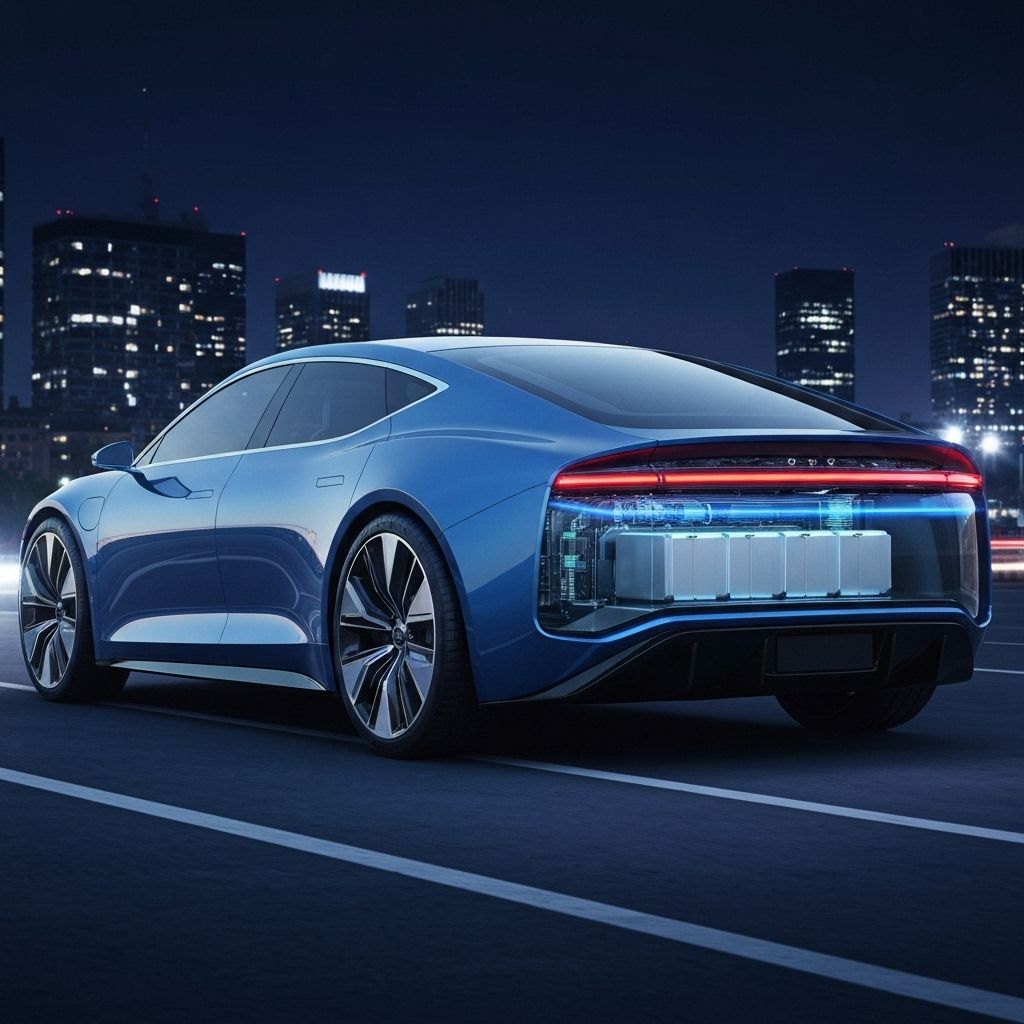
Solid-State Batteries Enable 1000-Mile Electric Vehicle Range
By Mark Johnson•October 27, 2024•
7 min read
•25,600 views
Waymo, Alphabet's self-driving car company, has announced a major milestone in autonomous vehicle technology with the completion of their 20 billionth mile of simulated driving. This achievement represents a critical step forward in the development and validation of autonomous driving systems.
In an industry where real-world testing is essential but limited by time and resources, simulated driving has become an indispensable tool for autonomous vehicle developers. Waymo's extensive simulation capabilities allow them to test their technology in a virtually infinite variety of driving scenarios, including rare and dangerous situations that would be difficult or impossible to encounter naturally during on-road testing.
Dmitri Dolgov, co-CEO of Waymo, explained the significance of their simulation technology: "Our simulators aren't just digital representations of roads—they're sophisticated virtual environments that can replicate the physics, weather conditions, and even the unpredictable behaviors of human drivers and pedestrians. Every mile we drive in simulation is an opportunity to learn and improve our technology."
Waymo's simulation system, called CarCraft, uses high-definition 3D maps of real-world locations combined with advanced physics models to create realistic driving environments. The system can simulate thousands of vehicles simultaneously, each with its own artificial intelligence system that mimics human driving behaviors and decision-making processes.
What makes CarCraft particularly powerful is its ability to recreate real-world incidents and then "unroll" multiple variations of those scenarios to test how the autonomous system would respond in slightly different circumstances. This allows Waymo to thoroughly test their technology's ability to handle edge cases and emergency situations.
The 20 billion simulated miles represent approximately 2,000 years of human driving experience compressed into just a few years of development time. During this virtual driving, Waymo's autonomous system has encountered and successfully navigated countless scenarios, from routine highway driving to complex urban intersections and extreme weather conditions.
But simulation alone isn't enough. Waymo combines their virtual testing with extensive real-world driving experience. The company's vehicles have driven over 25 million miles on public roads across 25 U.S. cities, allowing them to validate their simulation results in the real world.
"Simulation and real-world testing are complementary," Dolgov noted. "Simulation allows us to test millions of scenarios quickly and safely, while real-world driving provides the critical validation that our simulations accurately represent reality. Together, they form an unbeatable testing methodology."
The results of this intensive testing are evident in Waymo's performance on public roads. The company's autonomous vehicles have demonstrated a safety record that exceeds that of human drivers in comparable conditions, with Waymo's fully autonomous vehicles operating without human safety drivers in parts of Phoenix for several years.
The implications of this advancement extend beyond just making autonomous vehicles safer. The ability to thoroughly test and validate autonomous systems before deploying them at scale is critical for regulatory approval and public acceptance of the technology.
Waymo's simulation technology is also evolving rapidly. The company is constantly improving the realism of their virtual environments, incorporating data from real-world incidents and advances in machine learning to make their simulations more accurate and predictive.
Recent improvements to CarCraft include more sophisticated modeling of adverse weather conditions like heavy rain, fog, and snow—historically challenging scenarios for autonomous vehicles. The system now also better simulates the unpredictable behaviors of cyclists, pedestrians, and other road users in complex urban environments.
Looking ahead, Waymo plans to continue expanding their simulation capabilities, with a goal of reaching 100 billion simulated miles in the next few years. They are also exploring new applications of their simulation technology beyond autonomous vehicles, including robotics and urban planning.
The broader autonomous vehicle industry has been following Waymo's lead in simulation technology. Most major autonomous vehicle developers now maintain sophisticated simulation environments, though few have matched the scale and sophistication of CarCraft.
As autonomous vehicles move closer to widespread deployment, simulation technology will play an increasingly important role in ensuring their safety and reliability. By allowing developers to test their systems in a virtually infinite variety of scenarios, simulation accelerates the development of autonomous technology while minimizing risks to public safety.
Waymo's achievement of 20 billion simulated miles represents not just a numerical milestone but a demonstration of the power of simulation to transform how we develop and deploy autonomous systems. As Dolgov puts it, "Simulation is the key to unlocking the full potential of autonomous driving. By creating a digital twin of the real world, we can test, learn, and improve our technology faster and more safely than ever before."
With continued advances in simulation technology and real-world testing, autonomous vehicles are poised to revolutionize transportation in the coming years, potentially reducing traffic accidents, improving mobility for those who cannot drive, and transforming our cities into more livable spaces with less congestion and pollution.