Back to Home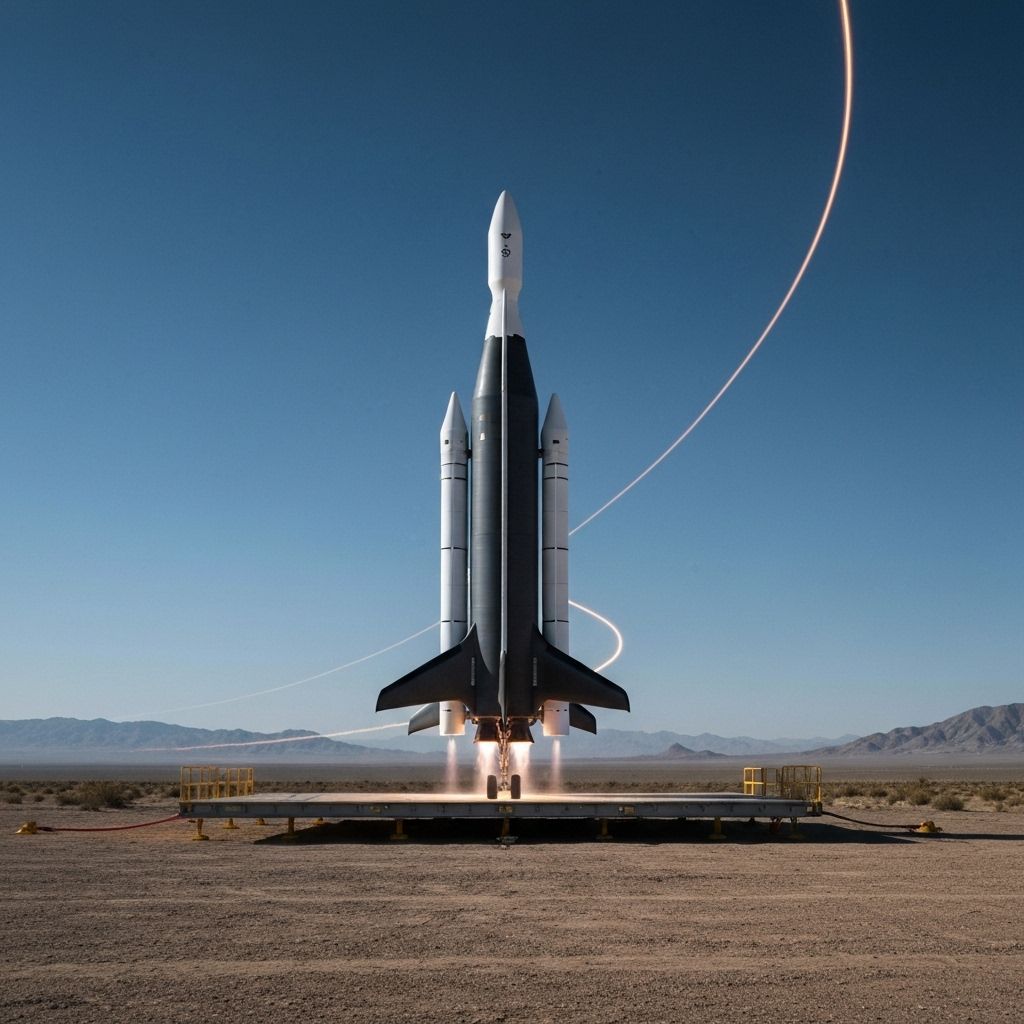



Reusable Rocket Technology Reduces Launch Costs by 70%
By Robert Kim•October 25, 2024•
6 min read
•14,600 views
Reusable rocket technology has achieved a breakthrough milestone, reducing launch costs by an unprecedented 70% compared to traditional expendable launch systems. This dramatic cost reduction is poised to transform the space industry by making space access more affordable and accessible than ever before.
Robert Kim, CEO of the aerospace company behind the innovation, describes the achievement as "a paradigm shift in space economics." The key to this cost reduction is the complete reusability of the rocket's first stage, which typically accounts for 60-70% of a rocket's total cost.
The company's latest rocket design features advanced heat-resistant materials that allow the first stage to withstand the extreme temperatures of atmospheric reentry, as well as precision landing technology that enables pinpoint touchdowns on autonomous drone ships at sea or on land-based landing pads.
To date, the reusable first stages have successfully completed multiple flights, with one particular booster completing its 20th mission. The company's engineering team has continuously refined the design, extending the lifespan of each booster and reducing maintenance requirements between flights.
The cost savings have already attracted new customers to the space industry. Small satellite operators, research institutions, and emerging space nations now have access to space that was previously prohibitively expensive. Launch prices have decreased from approximately $10, 000 per kilogram of payload to less than $3000 per kilogram.
Beyond immediate cost savings, the technology has enabled more frequent launch windows, reducing scheduling bottlenecks that have long plagued the industry. This increased launch cadence is particularly valuable for satellite constellation deployments that require multiple launches within short timeframes.
The technology has also spurred innovation in other areas of spacecraft design. Engineers are now developing more sophisticated payload fairings that can be reused, further reducing launch costs. Additionally, the company is working on technologies to recover and reuse the upper stages of rockets, which could potentially reduce costs by another 20-30% in the future.
NASA has been a key partner in the development of reusable rocket technology, with the space agency's Commercial Resupply Services and Commercial Crew Program contracts providing critical funding and operational experience. These partnerships have not only benefited private industry but have also enabled NASA to focus more of its budget on deep space exploration missions.
Environmental benefits have also emerged from this technological shift. Reusable rockets generate significantly less manufacturing waste and require fewer raw materials than their expendable counterparts. The company has also been working on developing more environmentally friendly propellants to further reduce the ecological impact of space launches.
Looking forward, the reduced cost of access to space is expected to catalyze growth in space tourism, satellite-based Earth observation, space-based solar power research, and even lunar and Mars exploration. Several private companies are already planning to capitalize on these lower costs with ambitious plans for space habitats and lunar resource utilization.
Kim summarizes the broader impact: "This isn't just about cheaper rockets—it's about opening up space to a new generation of innovators and entrepreneurs. We're creating a future where space is an integral part of our economic and technological ecosystem."
You May Also Like
View AllDelivery Robots Navigate City Streets with 99.9% Safety Record
5 minOct 25
New Satellite Network Promises Global Internet Coverage
5 minOct 27
AWS is spending $50B to build AI infrastructure for the US government
3 minNov 24
Find Your Grind raises $5M to grow platform empowering students to explore unique career paths
4 minNov 25