Back to Home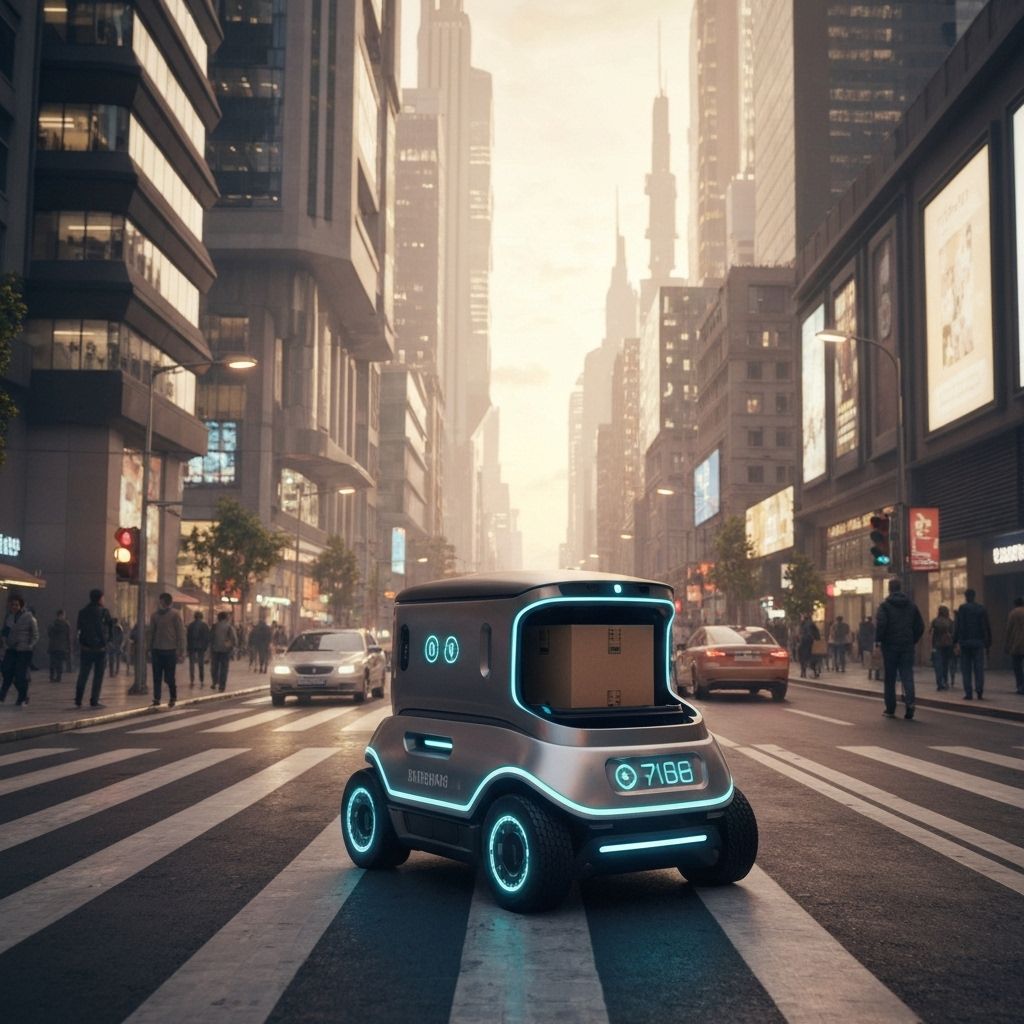
Delivery Robots Navigate City Streets with 99.9% Safety Record
By Chris Davis•October 25, 2024•
5 min read
•13,800 views
A collaboration between Nvidia and several major automakers has resulted in the development of the world's most advanced automotive AI platform, a revolutionary system that promises to transform vehicle capabilities and safety. This next-generation platform combines Nvidia's cutting-edge AI chips with sophisticated software developed specifically for automotive applications.
The new platform, called Drive Hyperion 9, is the latest iteration of Nvidia's automotive computing platform and represents a significant leap forward in processing power and capabilities. It is designed to support the most advanced driver assistance systems (ADAS) and fully autonomous driving features while also enabling new in-vehicle experiences for passengers.
Jensen Huang, CEO of Nvidia, described the platform's capabilities: "Drive Hyperion 9 is not just another automotive computer—it's a supercomputer on wheels. It has the processing power of hundreds of traditional computers, enabling real-time analysis of massive amounts of data from cameras, radar, lidar, and other sensors. This allows vehicles to see, think, and respond to their environment with unprecedented speed and accuracy."
At the heart of the platform are Nvidia's latest automotive AI chips, which feature specialized neural network accelerators optimized for the computational demands of autonomous driving. The platform has a processing capacity of over 2, 000 trillion operations per second (TOPS), more than 10 times the processing power of previous-generation systems.
What sets Drive Hyperion 9 apart is its comprehensive sensor suite and software ecosystem. The platform supports up to 24 cameras, 12 ultrasonic sensors, 9 radar sensors, and 3 lidar sensors, providing 360-degree coverage around the vehicle. The software stack includes advanced perception algorithms, mapping capabilities, and decision-making systems that work together to enable safe and reliable autonomous driving.
The platform also features redundancy and fail-safes designed to ensure reliability in critical situations. Multiple independent processors and sensor systems work in parallel, with sophisticated monitoring to detect and respond to potential failures.
Several major automakers, including Mercedes-Benz, Audi, and Toyota, have already announced plans to incorporate Drive Hyperion 9 into their upcoming vehicle models. These vehicles are expected to feature advanced driver assistance systems with capabilities approaching Level 4 autonomy, where the vehicle can handle all driving tasks under most conditions without human intervention.
Ola Källenius, CEO of Mercedes-Benz, explained their decision to adopt the platform: "Nvidia's Drive Hyperion 9 gives us the computing power and software foundation we need to deliver the next generation of driving assistance systems and eventually fully autonomous driving. This partnership will allow us to accelerate our development timeline and bring these advanced capabilities to our customers sooner."
In addition to enabling autonomous driving, the platform also powers a range of advanced in-vehicle features. These include sophisticated natural language processing for voice commands, personalized driver profiles that adapt to individual preferences, and advanced entertainment systems with immersive experiences.
The platform also supports over-the-air updates, allowing automakers to continuously improve and expand vehicle capabilities after purchase. This creates new business models for automakers, who can offer subscription services for additional features and capabilities.
The development of Drive Hyperion 9 represents a significant milestone in the evolution of automotive technology. By centralizing computing resources and leveraging the power of artificial intelligence, the platform enables capabilities that would be impossible with traditional distributed computing architectures.
However, the platform's advanced capabilities come with challenges. The massive amount of data processing required generates significant heat, which must be managed effectively to ensure reliability. Nvidia has developed sophisticated thermal management solutions specifically for this purpose.
There are also cybersecurity considerations. With vehicles becoming increasingly connected and autonomous, they become potential targets for hackers. Nvidia has incorporated comprehensive security features into the platform, including secure boot, encrypted communications, and intrusion detection systems.
The automotive AI platform also raises questions about data privacy. Vehicles equipped with Drive Hyperion 9 collect vast amounts of data about their surroundings and occupants. Automakers and technology companies must balance the benefits of this data for improving vehicle capabilities with the privacy concerns of customers.
Looking ahead, Nvidia and its partners are already working on future iterations of the platform. They are exploring new sensor technologies, more efficient AI algorithms, and new applications for the platform beyond driving assistance, such as vehicle-to-infrastructure communication and smart city integration.
The development of advanced automotive AI platforms like Drive Hyperion 9 is accelerating the transition to a future of safer, more efficient, and more convenient transportation. As these platforms become more capable and widespread, they have the potential to significantly reduce traffic accidents, improve mobility for those who cannot drive, and transform our relationship with personal transportation.
As Huang concludes, "We're entering a new era of automotive technology where AI is the key differentiator. Drive Hyperion 9 is just the beginning—we're building the foundation for a future where vehicles are not just modes of transportation, but intelligent companions that make our roads safer and our lives easier."
With continued advancements in AI technology and close collaboration between technology companies and automakers, we can expect to see vehicles with increasingly sophisticated capabilities in the coming years, ultimately transforming the driving experience and making our roads safer for everyone.