Back to Home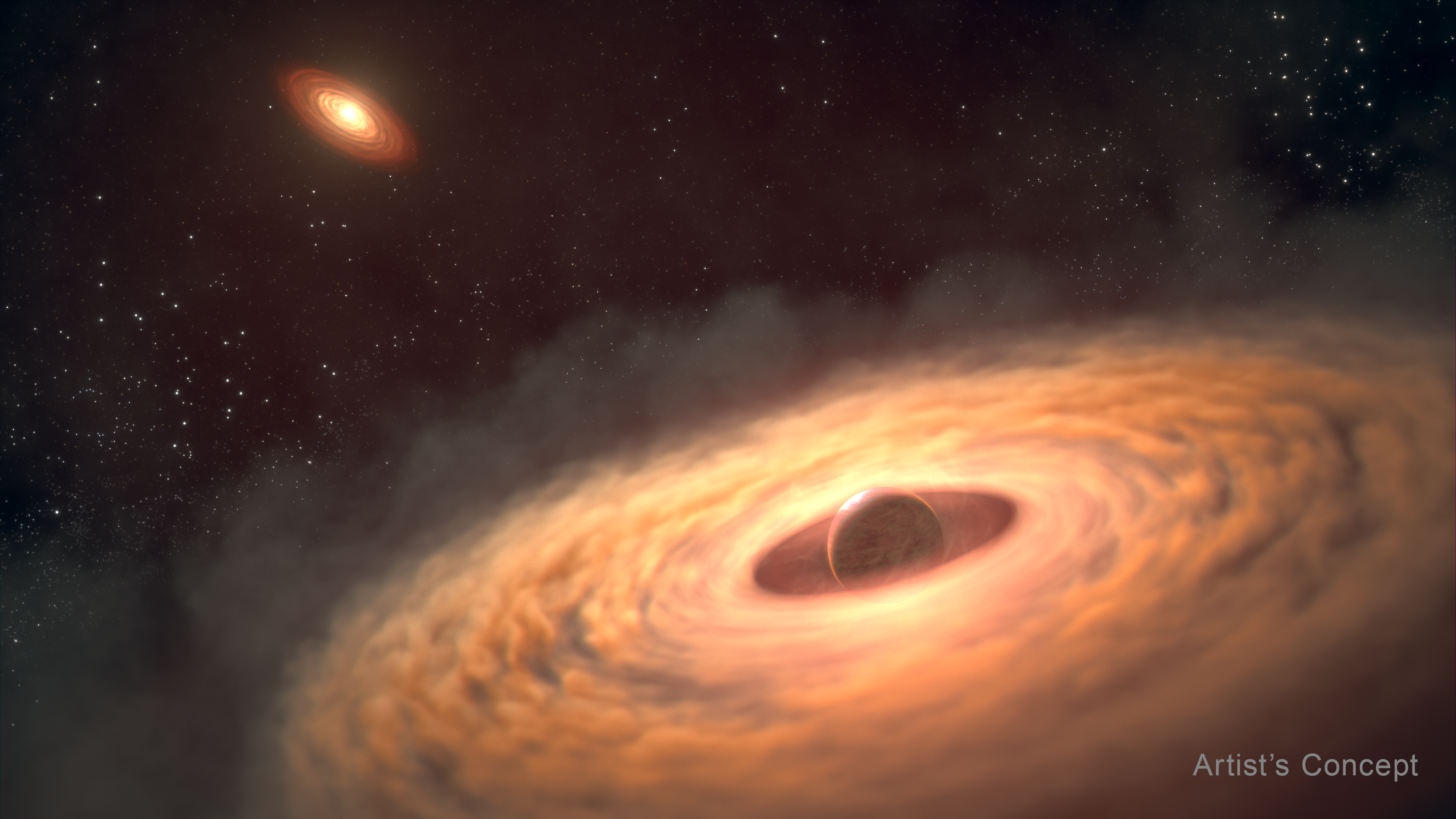
NASA's Webb Telescope Studies Moon-Forming Disk Around Massive Planet
By Webb Science Team•September 5, 2023•
6 min read
•15,432 views
NASA's James Webb Space Telescope has provided astronomers with the most detailed observations yet of a circumplanetary disk - the ring of gas and dust that surrounds a planet and from which moons form - around a massive exoplanet. This marks a significant advancement in our understanding of how moons form around gas giant planets.
The observations focused on the exoplanet PDS 70c, which is about the size of Jupiter and orbits a young star approximately 370 light-years from Earth. Using Webb's powerful near-infrared instruments, scientists were able to detect carbon monoxide and other molecules within the disk, providing clues about its composition and temperature.
The data reveals that the disk has sufficient material to form up to three moons the size of Earth's Moon. The researchers also found evidence suggesting that the disk is actively accreting material, indicating that moon formation is likely underway in this system.
This discovery represents a major step forward in our ability to study the formation of moons around exoplanets, which has been challenging with previous observatories due to the glare from host stars overwhelming the faint light from circumplanetary disks. The Webb telescope's advanced capabilities are opening new windows into planetary systems throughout our galaxy.